



In this article
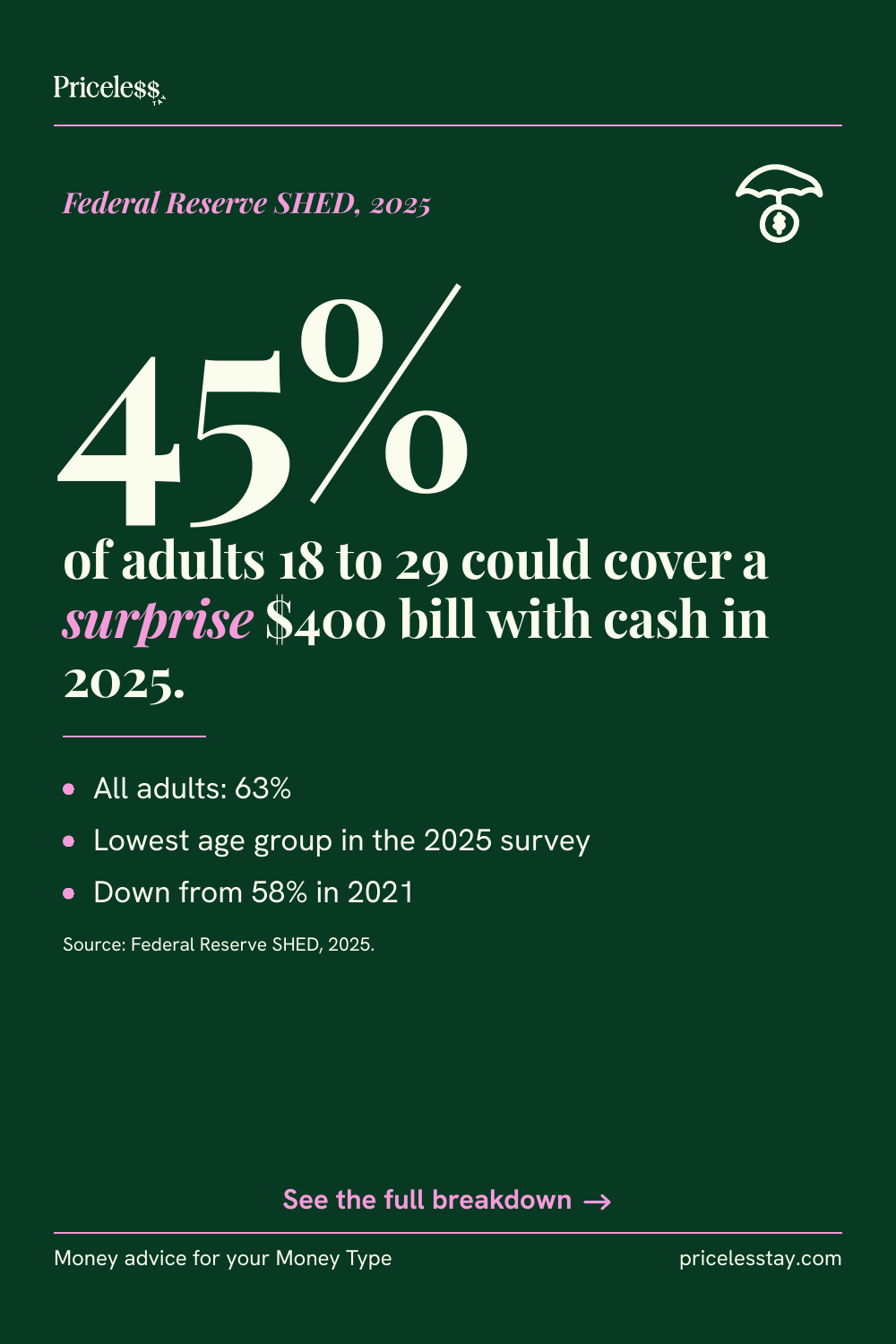
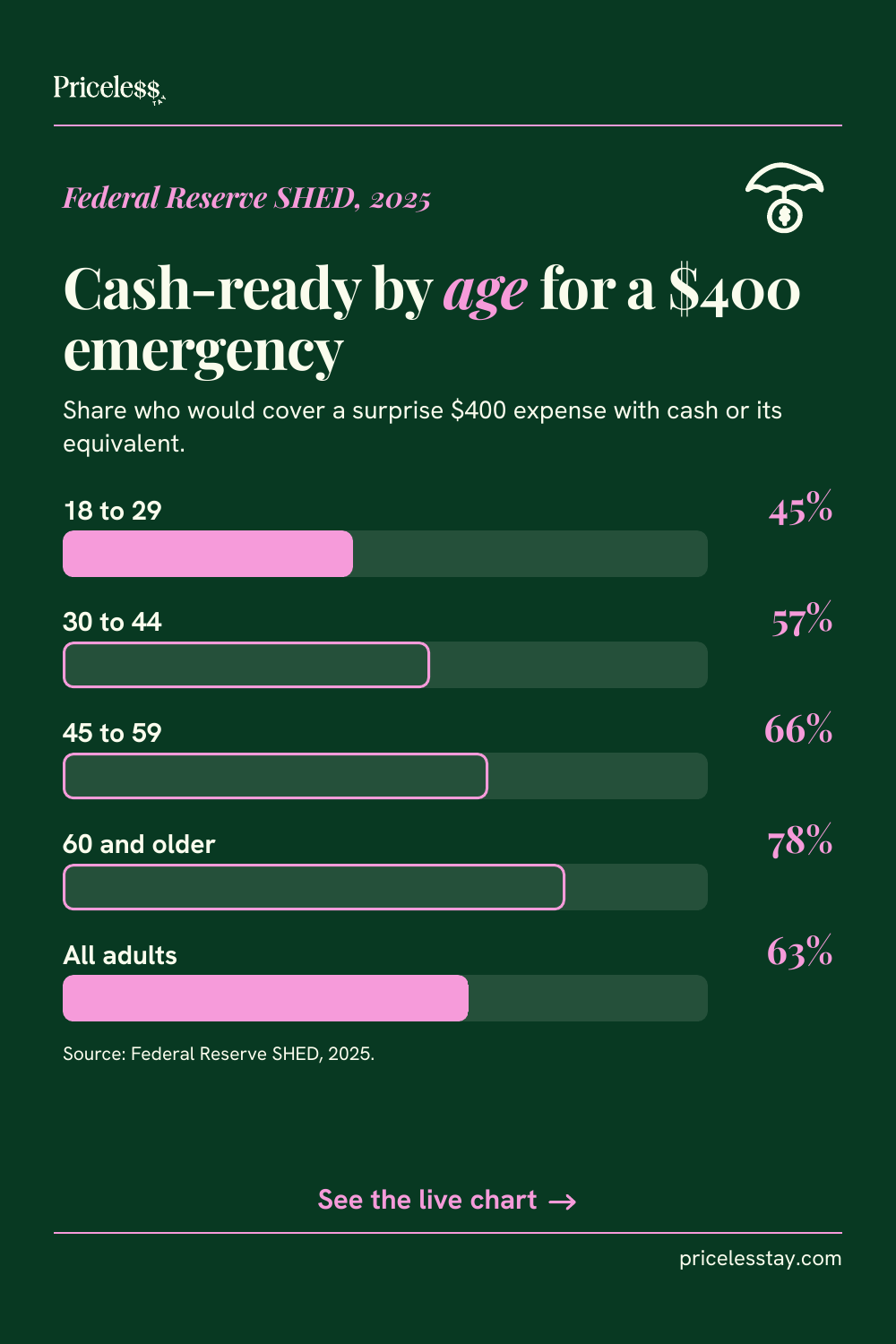
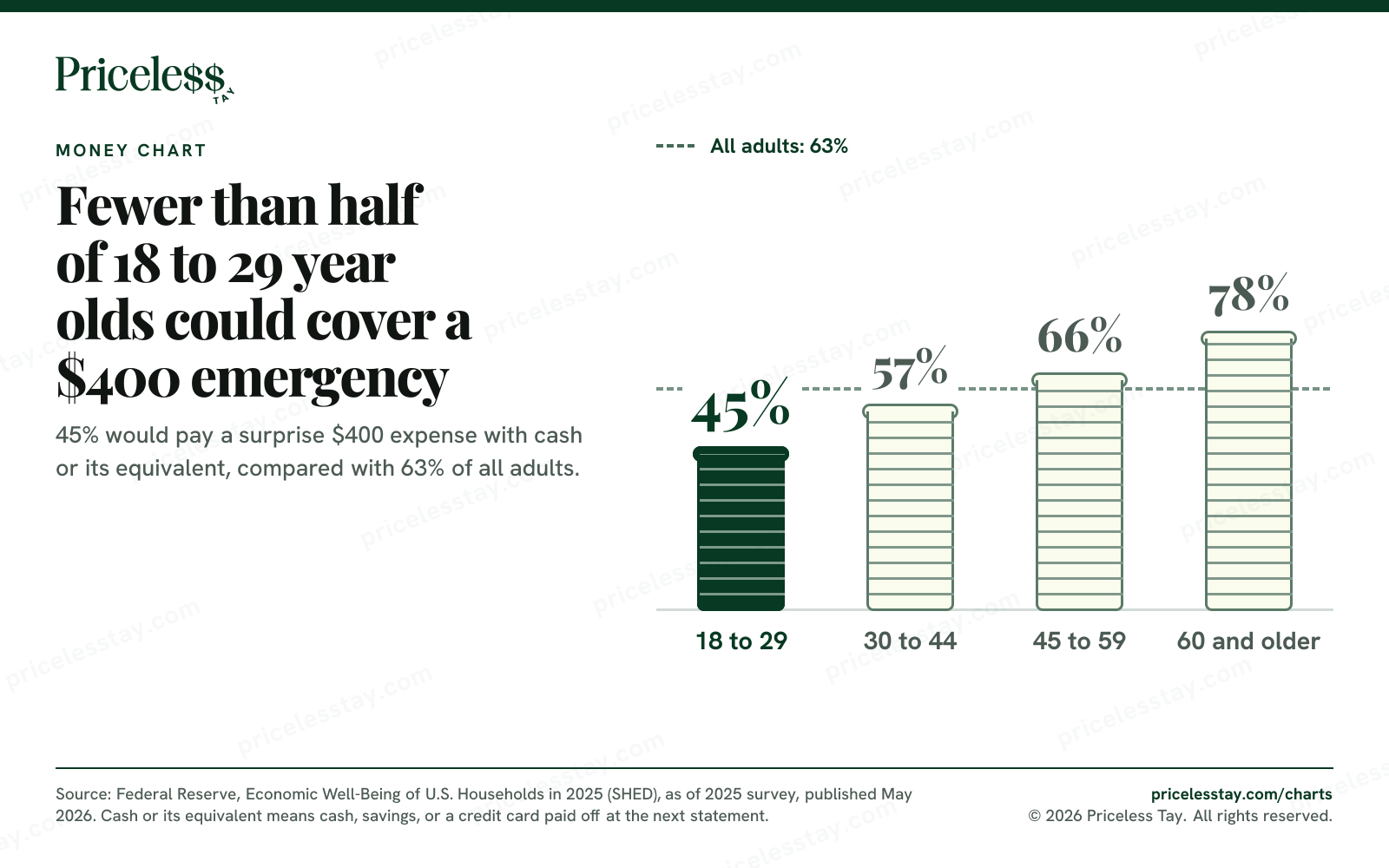
45% would pay a surprise $400 expense with cash or its equivalent, compared with 63% of all adults.
Explore the data
| Group | Would cover a $400 emergency with cash or its equivalent (2025) |
|---|---|
| 18 to 29 | 45% |
| 30 to 44 | 57% |
| 45 to 59 | 66% |
| 60 and older | 78% |
| All adults | 63% |
Source: Federal Reserve, Economic Well-Being of U.S. Households in 2025 (SHED), as of 2025 survey, published May 2026.
How many young adults can cover a $400 emergency?
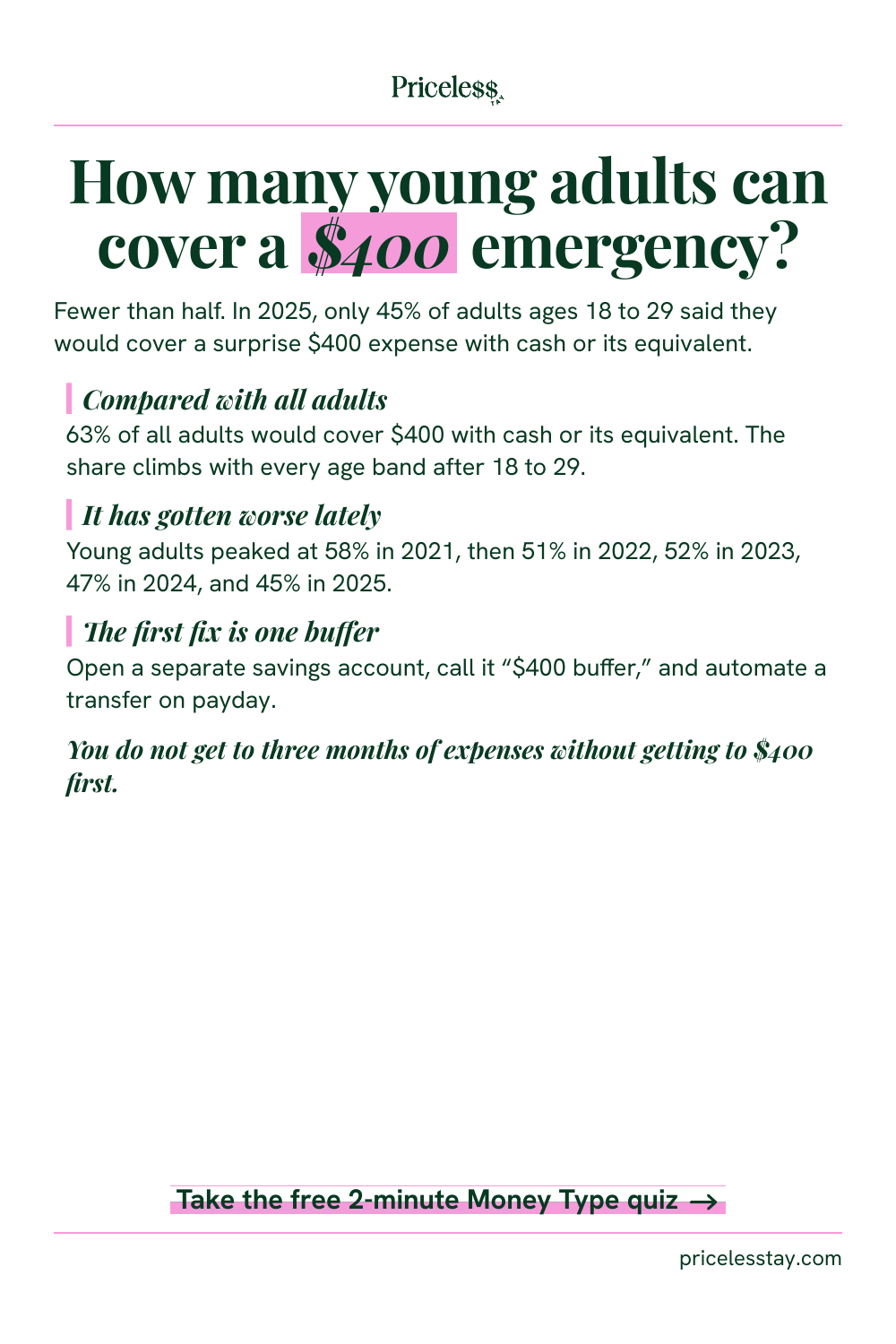
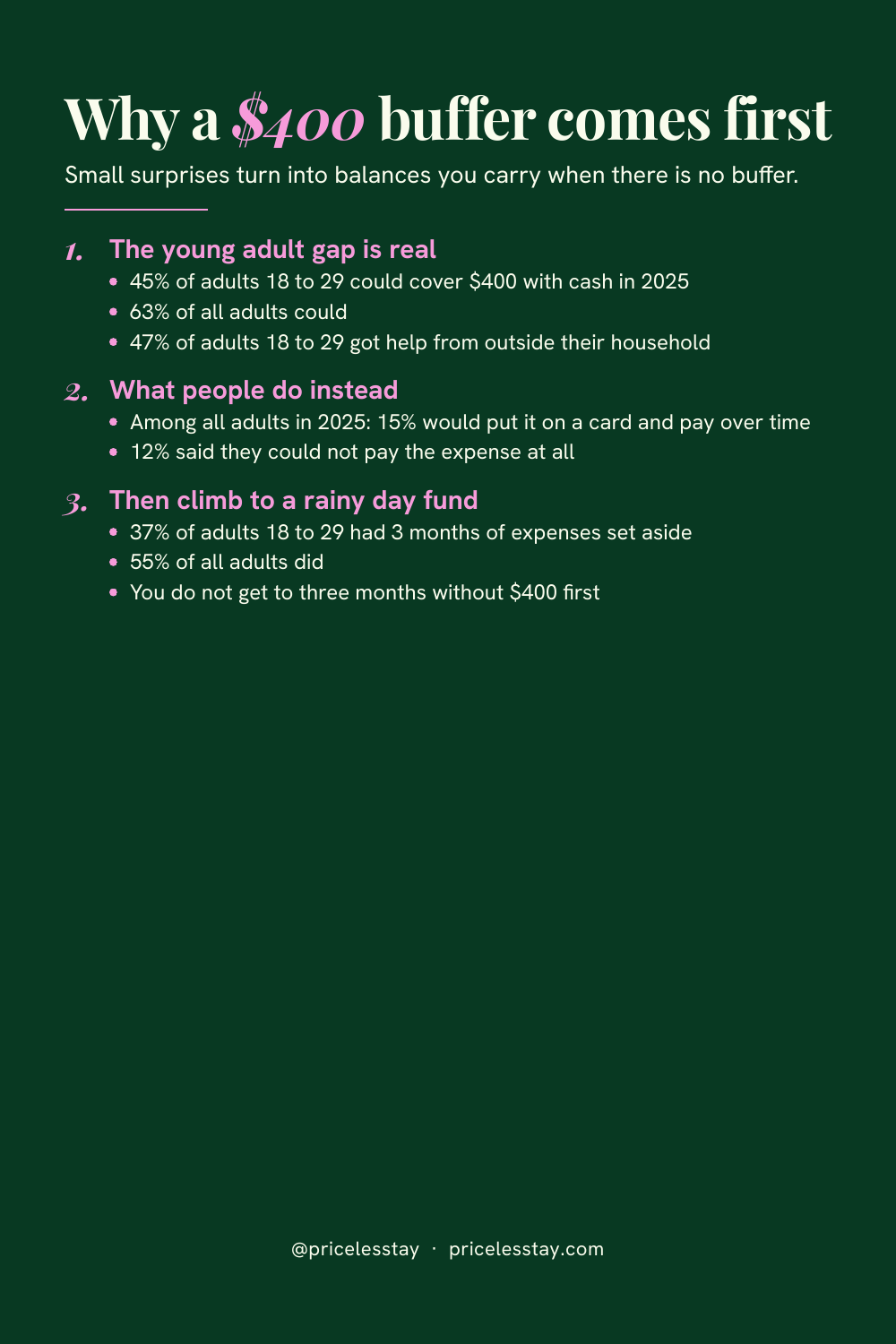
Fewer than half. In the Federal Reserve's 2025 Survey of Household Economics and Decisionmaking (SHED), 45% of adults ages 18 to 29 said they would cover a surprise $400 expense with cash or its equivalent. That's the lowest share of any age group, and it climbs with every age bracket after that.
What does "cash or its equivalent" mean?
The Fed counts three ways of paying: cash, money in savings, or a credit card paid off in full at the next statement. Everyone else said they would borrow, sell something, or couldn't cover the expense. Among all adults in 2025, 15% said they would put it on a credit card and pay it off over time, and 12% said they wouldn't be able to pay it right now by any means.
Has it gotten better or worse for young adults?
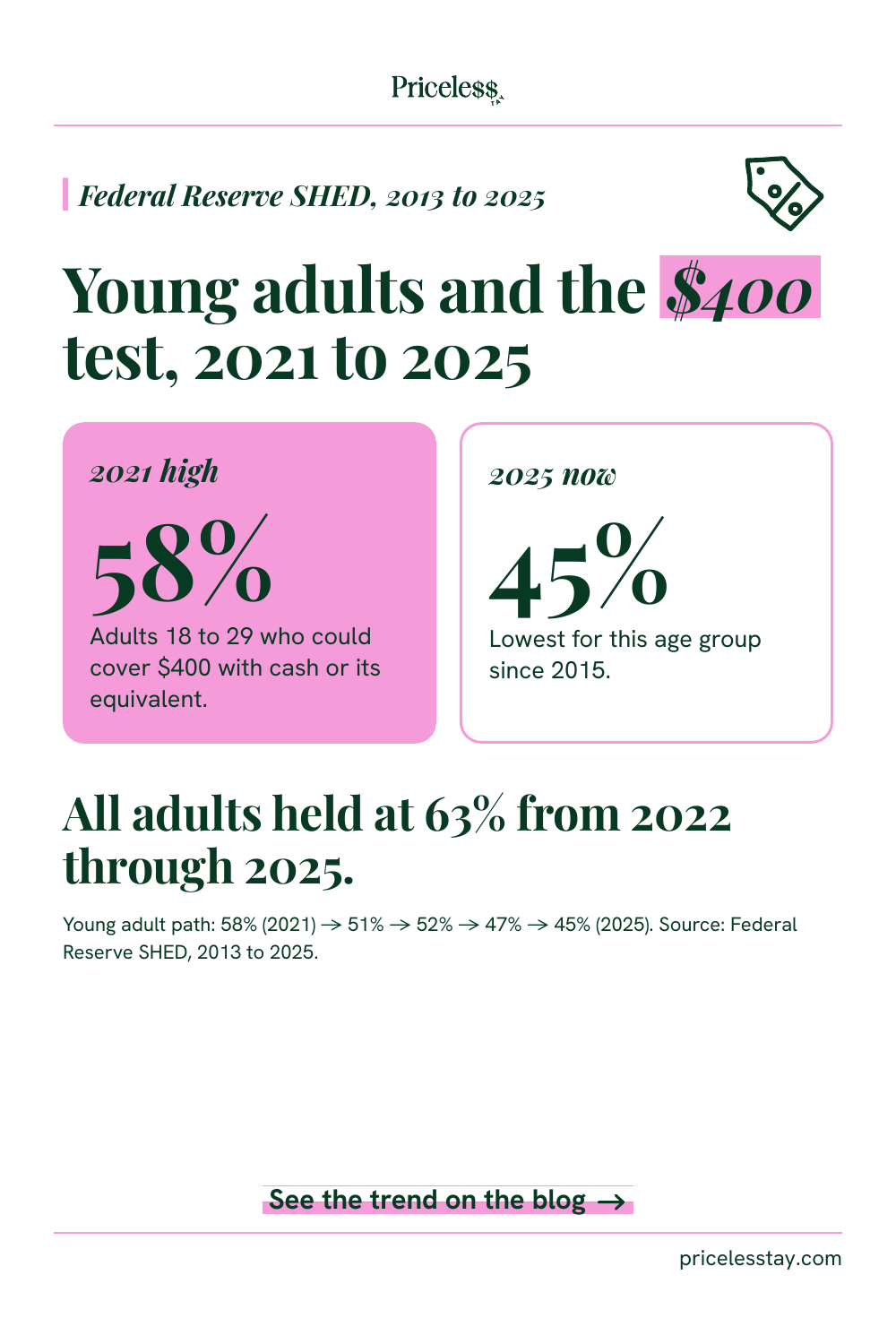
Worse, lately. The share of 18 to 29 year olds who could cover $400 with cash or its equivalent peaked at 58% in 2021, then landed at 51% in 2022, 52% in 2023, 47% in 2024 and 45% in 2025. Over the same stretch, the share for all adults held at 63% from 2022 through 2025.
Where does this data come from?
From the Federal Reserve's SHED data visualization table and its report, Economic Well-Being of U.S. Households in 2025, published May 2026. The 2025 survey was fielded in October 2025. The Fed reports by age group, not by generation.

What this means for you
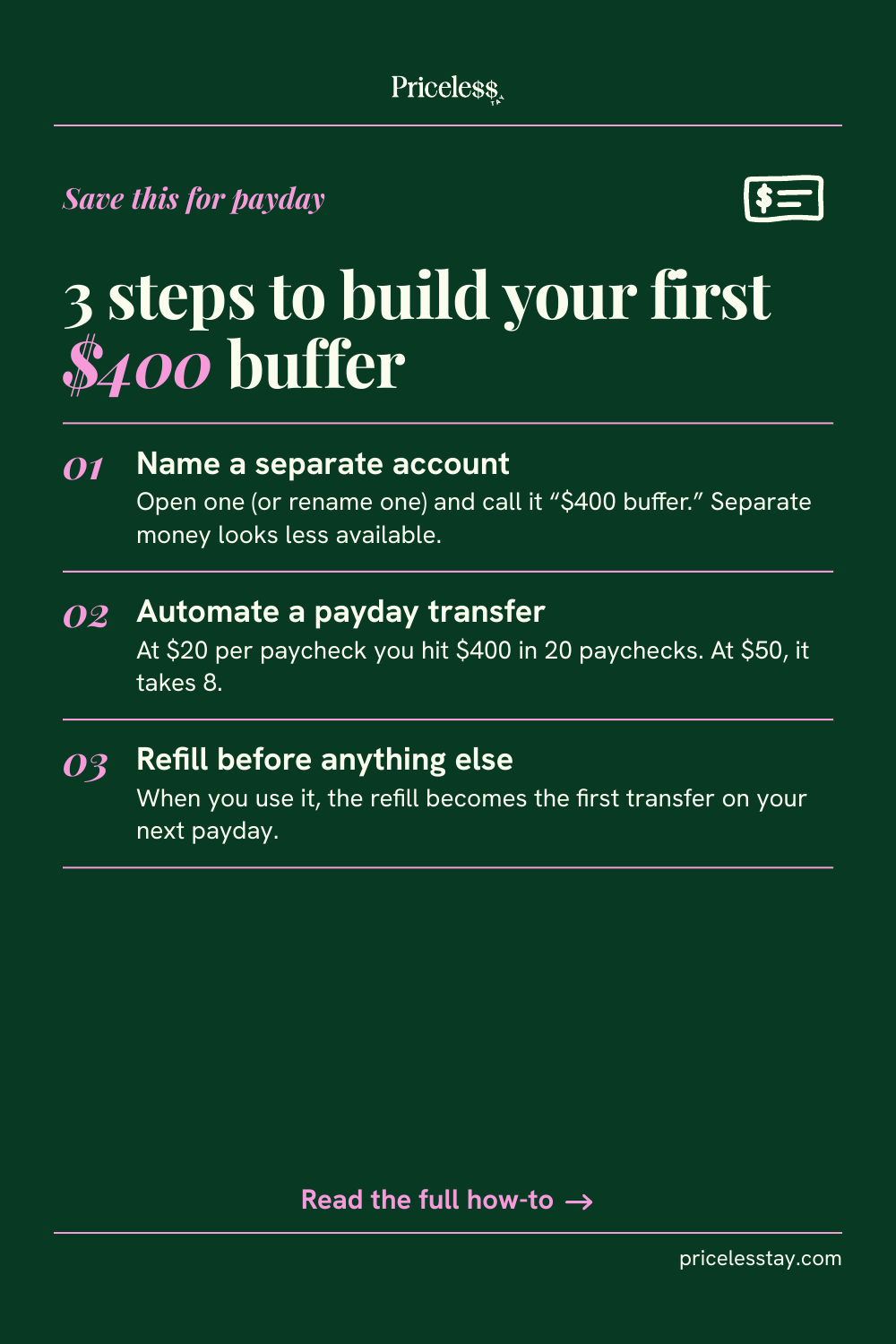
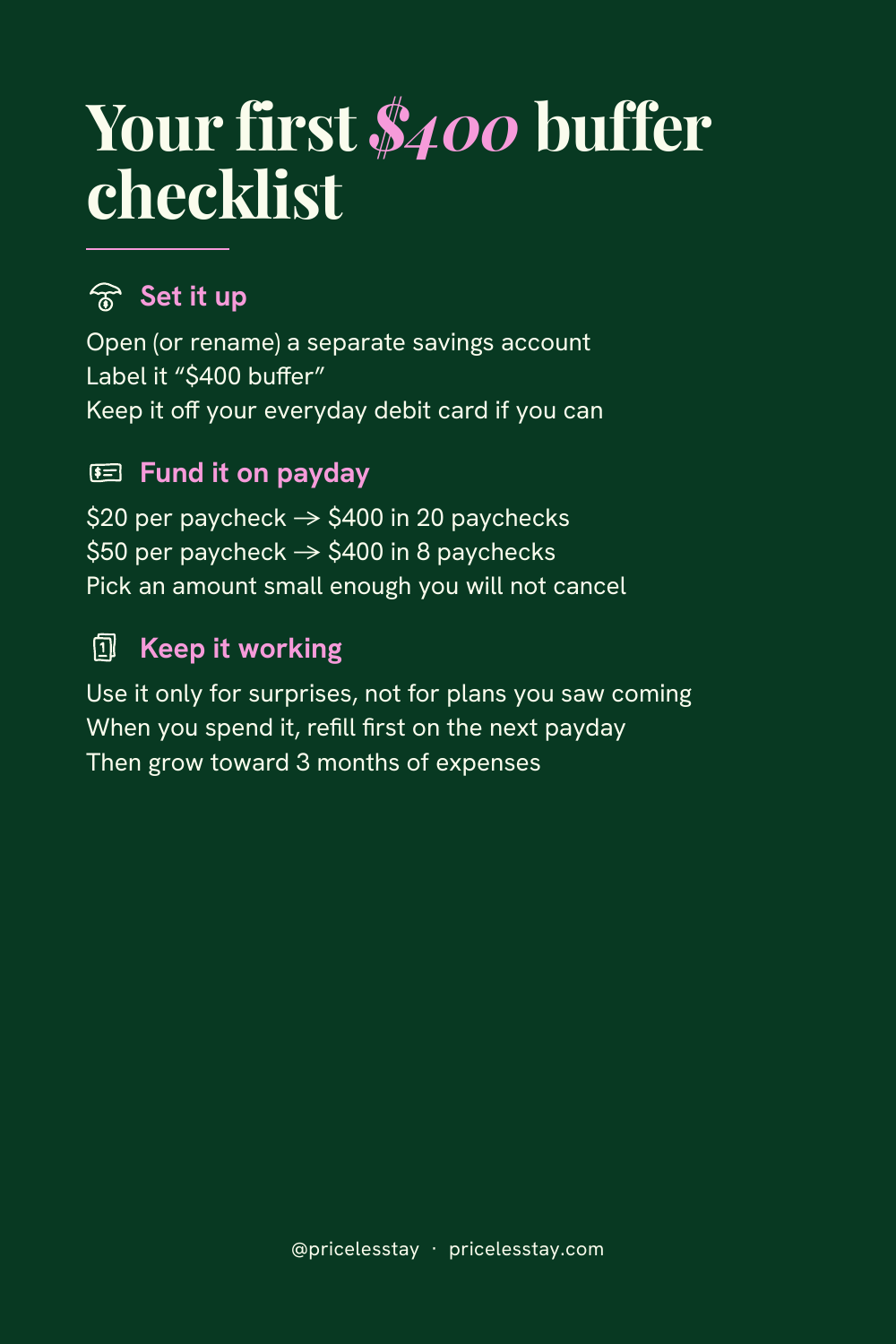
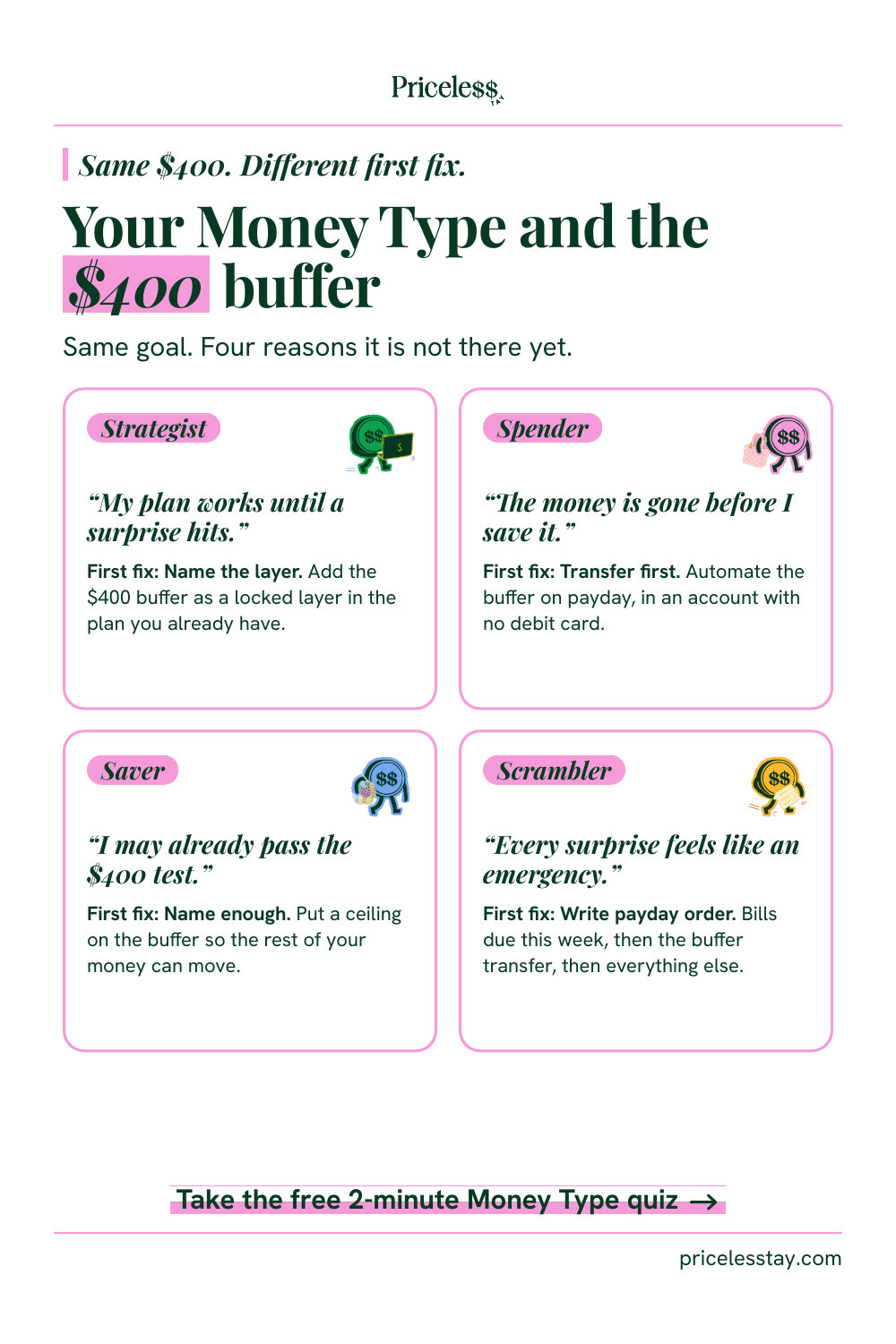
The first fix is one $400 buffer, built before anything else.
A surprise bill turns into borrowing when there's nothing set aside, and that cost comes out of next month too. How you build the buffer depends on your Money Type: Spender, Saver, Scrambler or Strategist. The free quiz shows which first fix fits you.
Questions
In 2025, 63% of all U.S. adults said they would cover a $400 emergency expense with cash or its equivalent, according to the Federal Reserve's SHED survey.
Among adults ages 18 to 29, 45% said they would cover a $400 emergency with cash or its equivalent in 2025, the lowest of any age group. The Fed reports by age, not by generation.
Only if you pay it off in full at the next statement. The Fed counts that as cash or its equivalent; carrying a balance doesn't.
Yes. Download the images or copy the embed code on this page. Please keep the source line and link back to this page.
Source and methods
Data from Federal Reserve, Economic Well-Being of U.S. Households in 2025 (SHED), as of 2025 survey, published May 2026. Cash or its equivalent means cash, savings, or a credit card paid off at the next statement. Chart and analysis by Priceless Tay. Rules can change after this date, so check your state's department of education for the latest.
You made it to the end. That's Saver-level patience.